Keiji Haino CD “Who knew than so many blues should reside here too…” Hören
25th Nov, Osaka University of Arts – Keiji Haino plays gamelan
$24

 Japan'archives mailorder
Keiji Haino CD “Who knew than so many blues should reside here too…” Hören
25th Nov, Osaka University of Arts – Keiji Haino plays gamelan
$24
Youri Kun is Hiroshi Nar nickname who played bass with some of the most important bands such Les Rallizes Dénudés, Zuni keisatsu, Datetenryu. He’s active as Youri Kun, Portcuss, Molls, Niplets…He released more than 30 releases and he’s a true singularity…Sometimes it soudns a bit like a japanese Jad Fair with a nasal and weird voice, with always one foot in rock n’ roll…
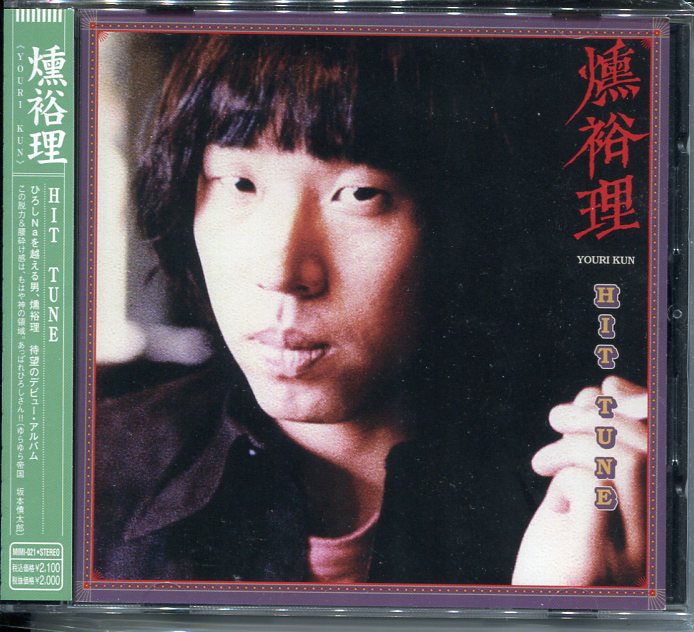
Youri Kun CD Hit Tune – Hören
First album released in 2006
$18
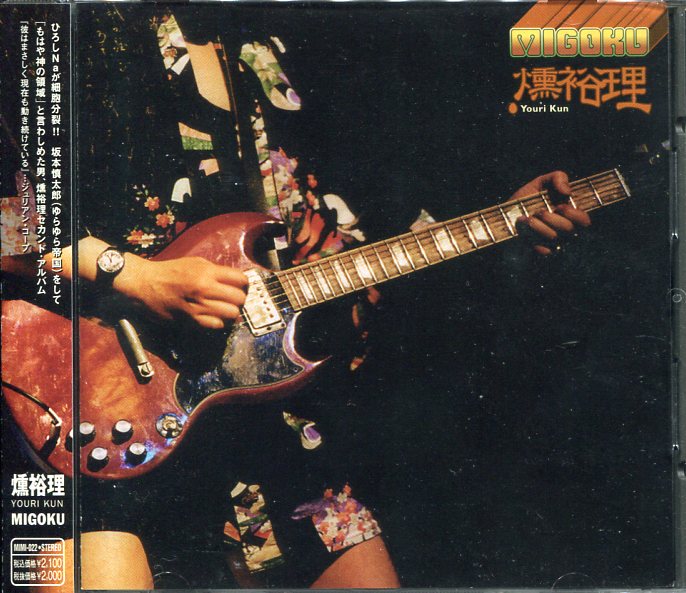
Youri Kun CD Migoku – Hören
2nd album from 2007
$18
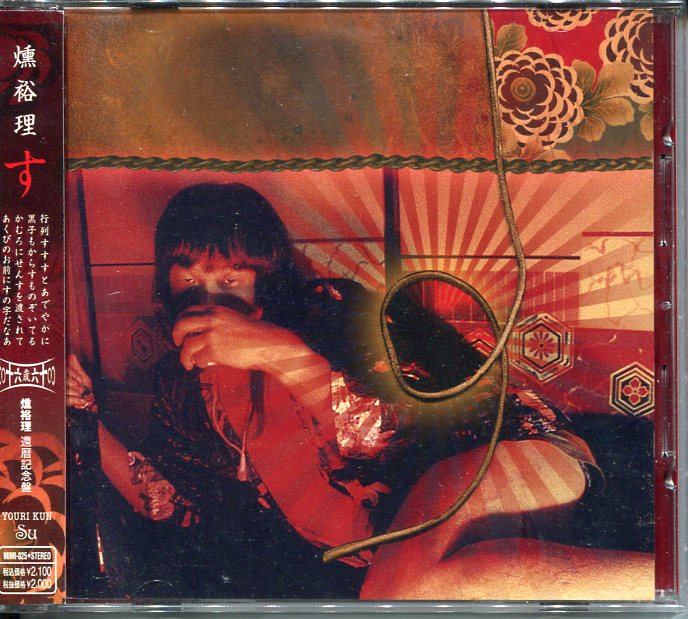
Youri Kun CD Su Hören
$18
Masami Makino CS Youlu Mystique Fort Evil Fruit
The debut release by Tokyo’s Masami Makino is a deeply introspective acoustic guitar-led psychedelic excursion.
Based around his mythic invention, the invisible mountain Kalasuyoulu, it traces the perspective of a solitary climber departing from reality and approaching the Absolute, experiencing different landscapes along the way.
Makino manages to convey a wide range of emotion and ambience and an unhurried sense of travel within the album’s 27 and a half minute runtime.
Essential listening for admirers of Masaki Batoh’s Ghost and the more understated corners of the PSF catalogue.
$10

Monde Bruits LP Purgatory – Urashima
Limited edition of 199 copies, * Monde Bruits is a Japanese experimental noise project formed in the early 1990s, from the brainchild of Iwasaki Shōhei. The sound has been compared to other experimental noise acts of the time, such as Merzbow, Hijokaidan or Incapacitants. However, Monde Bruits’ approach to noise is distinct, incorporating elements of musique concrète, industrial, and free improvisation which raw and bristly aesthetic. “Purgatory” cassette, released on the G.R.O.S.S. Japanese tape label, founded and run by Akifumi Nakajima, in 1992, is a significant document of Japanese experimental noise music from the early ’90s. The cassette’s limited release on a legendary Japanese tape label adds to its underground and obscure appeal, making it a sought-after collector’s item for fans of experimental noise music.
The opening track, occupying the entire a-side of the vinyl reissue, “In to Purgatory,” sets the stage with its distorted and unsettling sounds that build to a crescendo before giving way to the pounding noise. The track is a melancholic ode to the fleeting beauty of life, is a long and intense composition that seems to guide you through the levels of hell with its mix of distorted sounds and synthetic melodies, which creates a sense of unease with its eerie atmosphere and unsettling sounds.
On the flip side, the second track “Out to Purgatory” is another highlight, with its throbbing beat and distorted feedback, its harsh and abrasive sound, unconventional approach and a lo-fi production that seem to be calling out from the depths of the underworld.
Overall, “Purgatory” is an incredibly immersive and powerful release that showcases the unique talents of Monde Bruits. The use of distorted sounds, industrial textures, and electronic melodies creates a haunting and foreboding atmosphere that transports the listener to another world. If you’re a fan of experimental music that pushes boundaries and explores new sonic territories, then this release is definitely worth checking out.
Skillfully remastered at Audio Dissection from the original audio master by Emanuele Bonini, exclusively for this vinyl version, and released in a limited edition of 199 copies with original artwork and double insert with original credits and complete interview by Satoru Higashiteto translate in English by David Hopkins (RIP) originally published on Bananafish magazine. This is a must-listen for fans of noise, industrial, and avant-garde music.
$25 only a very few


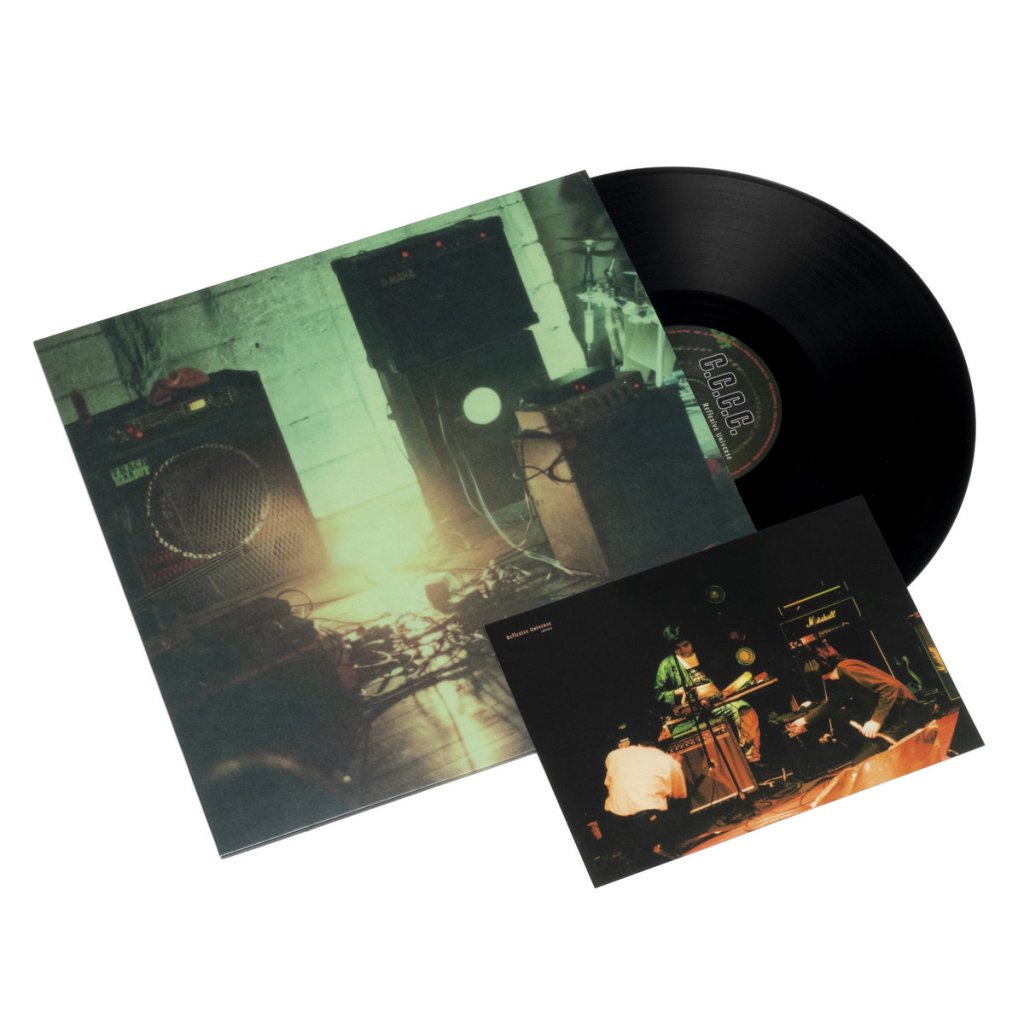
C.C.C.C. LP Reflexive Universe – Urashima
Deluxe vinyl LP version. Limited edition to 199 copies ** C.C.C.C. (Cosmic Coincidence Control Center) is a legendary Japanese noise music collective that was founded in Tokyo in 1989. The group originally had four members – Mayuko Hino, Hiroshi Hasegawa, Fumio Kosakai, and Ryuichi Nagakubo – who are known for their unique approach to noise music, and quickly gained a reputation for their intense and chaotic live performances. The group’s sound is characterized by its use of high-volume, distorted noise, feedback, and electronics, as well as their incorporation of unconventional instruments and objects. Beyond their music, members of C.C.C.C. has also been involved in a variety of artistic endeavors, including film, performance and installation art.
C.C.C.C.’s “Reflexive Universe” cassette, released on the Japanese label Vanilla Records in 1991, is a must-have for fans of Japanese noise music. The cassette features one track intense and immersive noise, showcasing the group’s unique approach to sound and experimentation. The album is a 23-minute epic that builds from a fast, almost hypersonic opening to a wall of noise that seems to encompass the entire universe. Recorded live at Maya in Kobe on September 15th, 1991 only with two members performing – Mayuko Hino at electronics and voice plus Hiroshi Hasegawa at synthesizer and electronics. The performance is a testament to the group’s innovative and boundary-pushing approach to sound, and a reminder of the enduring power of noise music as an art form, and Vanilla Records label has done an excellent job of capturing the raw and visceral sound of the group’s live performance.
$25
Violent Onsen Geisha LP Wagamama Na Ofukuro – Urashima
Limited edition to 299 copies ** In 1987, Nakahara Masaya founded the project Violent Onsen Geisha, which quickly became one of the most well-known and influential names in the Japanese noise music scene, distinctive among others for frequently displaying a bizarre, sarcastic, and mischievous sense of humor. The band’s name, which translates to “violent hot springs geisha,” is a reference to the traditional Japanese practice of hot spring bathing, as well as a nod to Nakahara’s confrontational and irreverent approach to music. As Violent Onsen Geisha, he creates experimental music that blends elements of noise, industrial, and avant-garde styles. He is known for his use of unconventional instruments and sounds, including feedback loops, field recordings, appropriated or “found” music, in addition to (or even instead of) straight-ahead noise. As well as his work as a musician, Nakahara is also a prolific visual artist and writer. His artwork has been exhibited in galleries and museums around the world, and he has published several books on the subjects of art and music. He is known for his irreverent and humorous approach to art, which often subverts traditional Japanese imagery and cultural norms. Despite his underground status, Nakahara has been a highly influential figure in the Japanese art and music scenes for over three decades. His work has inspired countless musicians and artists both in Japan and around the world.
“Wagamama Na Ofukuro” is a super rare 1993 cassette release by Nakahara’s label “My Fiance’s Lifework”. The title translates to “Selfish Mother” in English, and the tape is known for its confrontational and irreverent approach to music. It consists of a handful of tracks that features a barrage of harsh noise, feedback, and distorted vocals. Despite its abrasive nature, there is a sense of humor and playfulness to the music, with the artist incorporating samples of children’s songs and nursery rhymes into the mix. Nakahara’s use of unconventional instruments and sounds, as well as his willingness to push boundaries and challenge established norms, make this cassette a standout in the noise genre.
$25 only a few copies available


Japan Blues Meets The Dengie Hundred LP Demdike Stare
Six years since his debut Japan Blues album ‘Sells His Record Collection’, Williams is back – and it’s been worth the wait. Based around enka and minyo recordings made with London based singer Akari Mochizuki and Tsugaru shamisen master Hibiki Ichikawa at London’s Earthworks studio back in 2018, Williams adds field recordings made while traveling through Japan, inviting The Dengie Hundred to co-produce, bringing his own sound worlds into the mix.
The two spent several months shuttling ideas back and forth, processing mixes and adding environmental recordings, like snatched penny whistle melodies or the familiar whirr of an extractor fan. Singer Tamami Pearl is the final piece of the puzzle, providing an almost imperceptibly breathy aura to proceedings. The obsessively researched archivist’s resolve is still very much present, but the processing style and overall sound here is more faded than the Japan Blues of yore, transmuting discernible sounds into magickal textures that boil and bubble until all that’s left is vapour.
On ‘Sazanka, Hokkai Bon Uta’, Japanese vocals are dubbed into bare syllables, juxtaposed with flute improvisations and muddy whirrs. Eventually, the instrumental elements turn to noise, like some shortwave radio transmission slowly falling out of range. Environmental sounds become uneven, clunking percussive currents offer a sort of dream logic, morphing into faint choirs. In the final third, Williams pulls away the veil almost entirely.
The album’s most compelling section is the side-long ‘Soran, AIzu Bandai-San, Shimabara Lullaby’. If you’ve heard Robert Turman’s 1981 album “Flux” – a reel-to-reel recorded slo-mo kalimba and piano masterpiece – you’ll have an idea of how this one rolls. Williams and The Dengie Hundred work into the source material like modelling clay, dubbing and distorting shamisen twangs and echoing vocals into half-speed, dissociated dream visions.
It’s not Ambient by any means, but there are undoubtedly traces of Brian Eno’s earliest, most crucial experiments. It’s not Folk music either, but Williams’ deep obsession with Japanese traditions allows him to integrate sounds holistically, provoking a conversation rather than simply cherry picking aesthetic decorations. He works like a dedicated DJ, giving The Dengie Hundred room to tweak the spaces in-between. Together, they create an atmosphere that’s fiendishly hard to put into words, and even harder to forget.
If you’re into tape-damaged industrial experiments (think Skaters, Spencer Clark, Aaron Dilloway et al), the surrealist global exploration of labels like Stroom, or simply after a new perspective on Japanese folkways, “Japan Blues Meets The Dengie Hundred” is unmissable.
Transparent orange vinyl ltd to 500- $29

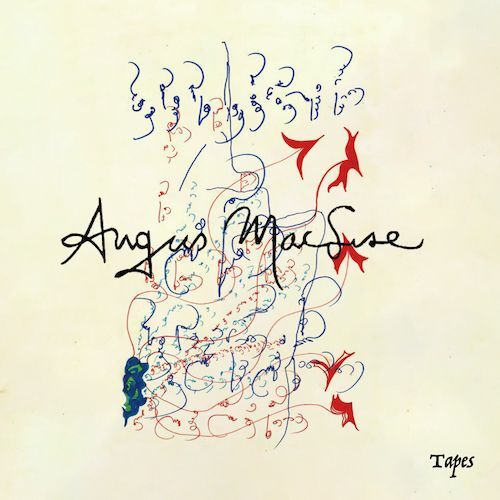
Angus Maclise 3CD box Tapes – Art Into life
Angus MacLise, the first drummer for the Velvet Underground, was a poet, composer, and a member of The Theatre of Eternal Music alongside La Monte Young. The “Tapes” 3CD Box is the first-ever reissue of a 3-cassette compilation that Pleasure Editions originally released in 2015, limited to only 100 copies. The 3CD box set comes with a miniature poster and track lists, and each CD has a paper sleeve that reproduces the original cassette card artwork.
This comprehensive 3CD box set is over three hours in length and includes session recordings with Tony Conrad and William Breeze (of Coil, Current 93, and Psychic TV), mystical recordings from the filming of Ira Cohen’s “The Invasion of Thunderbolt Pagoda” (1968), shortwave experiments, and sounds of Tibetan Buddhist monks recorded by MacLise. The “Tapes” compilation features excerpts from the archives of the Angus MacLise Papers, which are held at Columbia University Library. The archives contain over 100 hours of reel-to-reel tape recordings of live improvised music, theatrical performances, and sound experiments created by MacLise and his associates during the 1960s and 1970s. MacLise produced the original recordings in his own unique style, characterized by rough and peculiar editing. The release is curated and sequenced by Will Cameron and Mark Iosifescu. Jim O’Rourke completed a new sound restoration and mastering of the recordings in 2023.
Special thanks to Hetty MacLise, Ossian MacLise, La Monte Young, Marian Zazeela, Sheldon Rochlin, Ira Cohen, Rob Ward, Jim O’Rourke, Johan Kugelberg, Tim Barnes, Erica Barnes, Dia Art Foundation,and Robert Bielecki. This official release is authorized by Dreamweapon New York, a project of the MacLise Family Estate.
$42

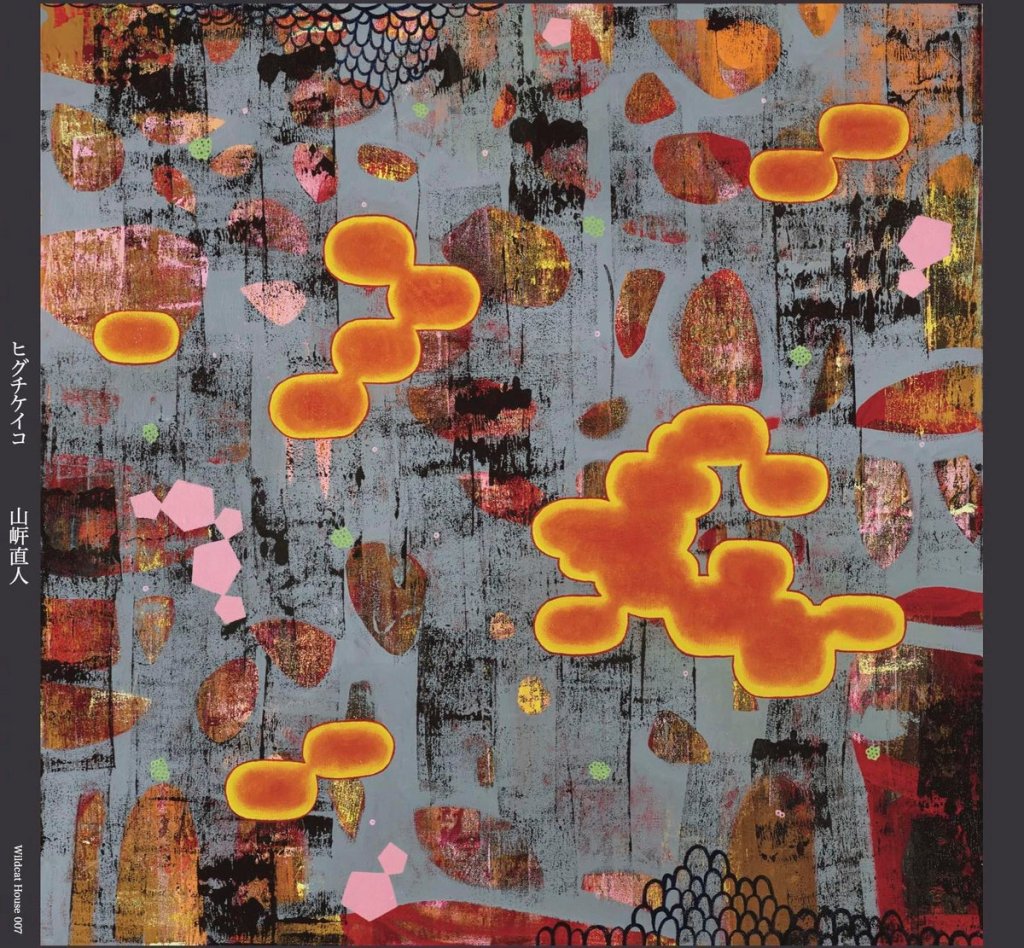
Keiko Higuchi- Naoto Yamagishi CD Live 2022 – Wildcat House
Naoto Yamagishi and Keiko Higuchi (Albedo Fantastica, Albedo Gravitas, Archeus…) have both studied abroad and returned to Japan: Yamagishi from France and Higuchi from the USA.
Keiko Higuchi ヒグチケイコ voice, piano
Naoto Yamagishi 山㟁直人 drums, percussion
comes in a glossy gatefold with art by Junko Yamamoto
$18
Ultra Bide LP The Original Ultra Bide – P-Vine
A band tha tsounds like a traffic accident, a ferocious synthesizer, and BIDE’s nonsense lyrics. Collecting the sound sources of “Ultra Bide”, which was active as a central member of Kansai NO WAVE from 1978 to 1980, the album released from Alchemy Records in 1984 is finally remastered and reissued! Ultra Bide is a quartet consisting of JOJO Hiroshige, who later formed Hijokaidan, Taiqui, who became the drummer for Ain Soph, BIDE (HIDE), who is still active in Kyoto, and Koichiro, who was a member of MaherShalal Hashin the early days. The phenomenal sound that had already established avant-garde punk in 1978 was not only cutting-edge at the time, but also the ultimate originality that had a great influence on the underground scene such as punk, noise, and psychedelic. ! It is also known that Oshiri Pen Pens respects them as the most influenced band.
$35

Ché-SHIZU LP “I can’t promise” – P-Vine
Che-SHIZU’s first album “I can’t promise” was released in 1984 from the independent label Zero Records. A rock band centered around erhu performer/singer Chie Mukai and bassist Takuya Nishimura. Continuing to make “songs” that are hard to call psychedelic or rock. The guitar is palyed by Kudo Tori from NOISE & Maher Shalal Hash Baz . This historical masterpiece isreprinted for the very first time on an analog board.
$35

S.O.B.Kaidan LP Noise, Violence And Destroy -P-Vine
Osaka’s representative SOB, who is said to have influenced Napalm Death, a big name in the grind world, collaborated with Hijokaidan, a noise violence group, for this work. Noise is echoing in the background, but it’s fast and cool, unprecedented high-speed guitar, high-speed drums, death voice vocals, and noise.
The unit “SOB Staircase” is a combination of the hardcore band “SOB”, which was active in the 1980s in Osaka, and Hijokaidan. Released on analog record in 1988, 3000 copies sold out immediately. Since then, it has been made into a CD three times, with a total of over 5,000 copies being pressed.
$35

Slap Happy Humphrey LP Slap Happy Humphrey P-Vine
Through the noise like a storm, Doji’s world appears and disappears like sunlight filtering through the trees…Morita Doji mixed with noise, the world’s only Morita Doji cover band, that’s Slap Happy Humphrey. Folk and noise, a miraculous space created by these two seemingly contradictory elements. The singing voice of Mineko Itakura covering Doji Morita and behind the noise, Sabert Blaze’s Hiroaki Fujiwara with Jojo Hiroshige on guitar
$35

 Japan'archives mailorder